4
min read
Building SaaS marketing from zero
5 lessons from Profound, Tavus, and Shovels

Sofya Leonova
Co-founder + Marketing Director
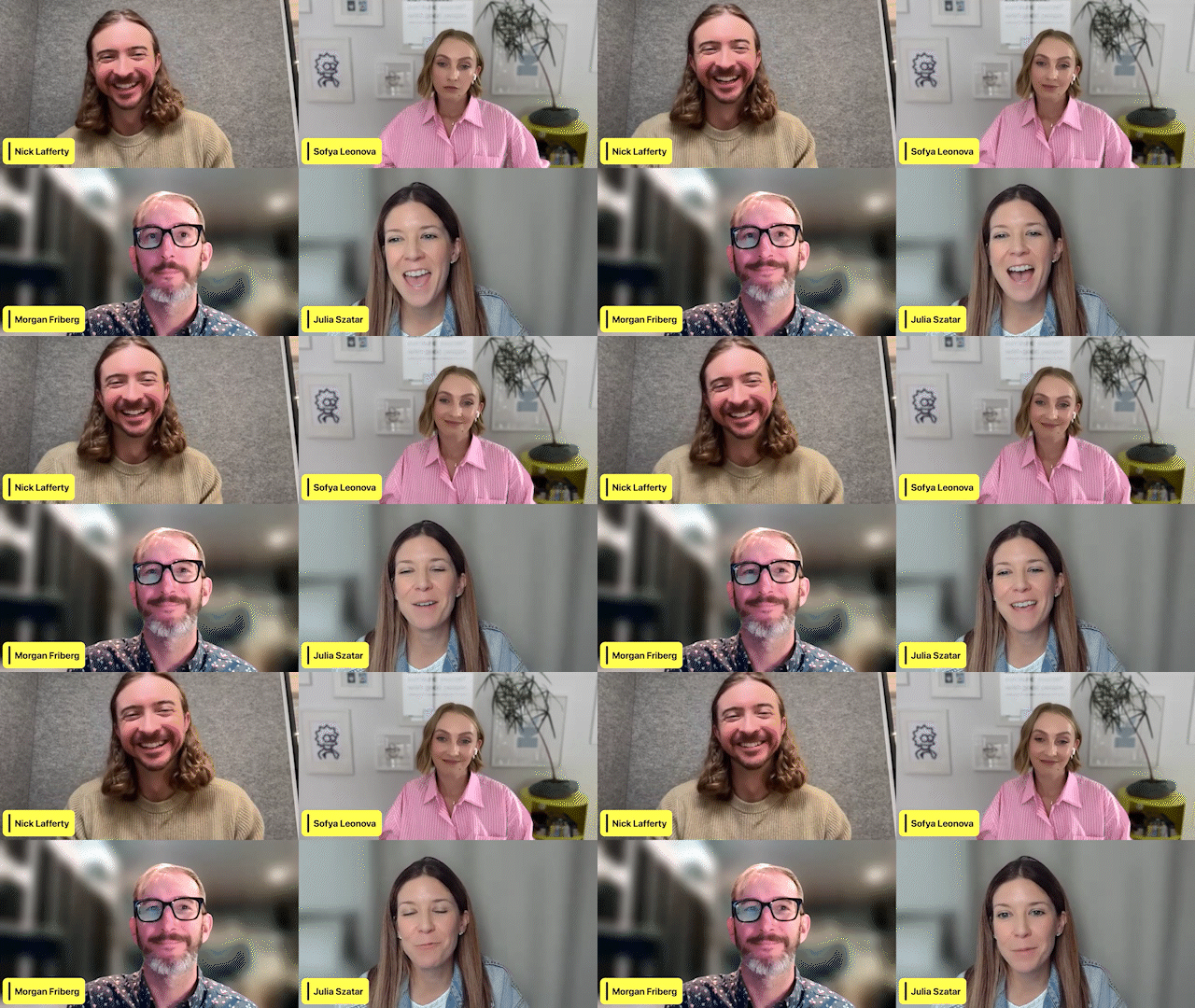
Last week I sat down with three founding marketers: Nick Lafferty (Profound), Julia Szatar (Tavus), and Morgan Friberg (Shovels) to talk about what it actually takes to build SaaS marketing from zero in 2026.
It was one of those conversations where I left with more notes than I went in with. Here are the five highlights that stood out the most and here’s the full conversation.
1. Events are back
Julia's framing on this stuck with me: digital is too noisy now, even organic. When a channel saturates, you switch. Either to something brand new like AEO, or to something old that got reinvented. Events fall in the second bucket.
But her actual playbook isn't "go rent a booth at the biggest conference in your space." It's much more deliberate. At Tavus, she tested formats explicitly: small targeted dinners, hackathons aimed at her developer audience, and partner events where a bigger brand carried the budget and the brand halo. Some worked, some didn't. Hackathons drove brand but not pipeline. Conferences delivered some of their biggest early deals. The point is she went in expecting to learn what worked for her specific audience, not to scale a channel from day one.
Nick took the opposite approach at Profound and started running their own conference. Four of them in the last eight months, with attendance climbing from 300 to 800. He claims hosting your own is actually cheaper than sponsoring someone else's, which is a bold claim worth taking seriously. The catch is Julia's counterpoint: it only works if you already have the groundswell to fill seats. For most early-stage companies, intimate dinners are a better place to start.
2. The FAQ schema trick that still works
Morgan added FAQ schema to long-form blog posts at Shovels and watched AI search inbound go from zero to meaningful. Fast, cheap, structural win. Google may have deprecated FAQ schema for traditional SEO, but the mechanic still works for AI search. Nick explained why: ChatGPT is fundamentally trying to answer a user's question. Content formatted as questions and answers gives it an obvious place to grab from.
Same logic applies a level up. Nick has seen lift just from changing headings from statements to questions. "Best practices for AI search" becomes "What are the best practices for AI search?" Tiny change, real difference. Just don't do this on your homepage. Question-format hero copy undercuts your authority. Save the tactic for your blog.
3. Freshness in AI search runs on a different clock than SEO
Per Profound's own data: content published or updated in the last 13 weeks gets 50% more AI citations than older legacy content. The same pattern holds for video. YouTube is the #1 most cited domain across Google's AI models, but videos from before 2023 rarely get pulled.
The bigger point is the structural advantage this creates. Google takes months to reward a new page. ChatGPT picks it up in days. If you're a small company competing against a legacy player with a three-month publishing approval cycle, this is a real advantage.
Updating existing content counts too, but only meaningful updates. Swapping a period for an exclamation point won't move anything. What does: real product updates, new expert quotes, byline additions, fresh testimonials. Nick monitors citations on Profound's top pages. When they start to dip, he goes back in with a substantive refresh and watches them climb back up. Worth doing on a regular schedule.
4. You don’t have to be a marketing team of one
Julia made a case that’s hard to argue with: anything posted from a brand account just doesn't read as real anymore. Founder content does. It’s an inexpensive strategy, but getting your founder to post consistently is the hard part.
But it's not just founders. If you're a marketing team of one, the rest of the company is part of your distribution. At Tavus, Julia leaned hard on her engineers to help with content marketing: recording demos, writing posts, even joining sales calls. When your audience is technical, your technical team is often more credible than you are. Same idea applies in reverse. If you sell to designers, your designers should be visible. If you sell to ops people, your ops lead is your best content engine.
Nick layered a small tactic on top of this at Profound. Anyone who inbounds on their contact sales form gets a LinkedIn connection request from him and both founders. The prospect is now getting a steady drip of founder content in their feed, for free. One caveat: be careful with LinkedIn automation. Companies like Apollo have learned the hard way that aggressive tooling can backfire.
5. Think bigger than product and funding announcements
Most marketing playbooks tell you what to launch: a feature, a campaign, a customer story. The more interesting question: what could you launch that no one else can?
Nick at Profound created a new job title (Marketing Engineer) and launched it like a product. It drove an inbound spike on par with their usual product and funding announcements. Wild for something with no product attached.
The takeaway isn't "go invent a title." It's that Profound's title sat at the intersection of two things: unique to them (they had the credibility and timing to claim it first) and valuable to their audience (marketers rethinking their teams in the age of AI).
What's true about you, your team, or your position that no one else can credibly claim, and where does that overlap with something your audience actually wants to talk about? Whatever sits in that overlap is worth treating as a launch.